Reimagining Ocean Governance: Critical Methods for Radical Possibilities
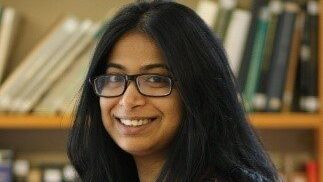
Surabhi Ranganathan (University of Cambridge)
Monday 28 September 2026, 11.00 – 17.00, UCLouvain Saint-Louis Bruxelles
Cycle Interdisciplinarités en droit
Language: English
Surabhi Ranganathan is Professor of International Law at the University of Cambridge, a Fellow of King’s College, Cambridge, and the Deputy Director of the Lauterpacht Centre for International Law. She is the winner of the 2025 Humboldt-Max Planck Research Award for her research on the history and political economy of ocean governance, and the pursuit of decolonisation within and against the law of the sea. Her writing on these topics has been published in leading law journals, edited collections and popular magazines like The Dial, and extensively covered in traditional and new media platforms. Professor Ranganathan is also co-editor of the forthcoming The Battle for International Law in the Neoliberal Era (OUP 2027), the recently published Cambridge History of International Law in Asia (CUP 2026), and co-editor-in-chief of the now open-access Leiden Journal of International Law.
During this masterclass, Surabhi Ranganathan invites us to think about how we could reimagine ocean governance as one aspect of global commons and natural resources governance. The seminar will draw on Prof. Ranganathan’s research to explore questions about international law’s political economy and epistemic in/exclusivity.
Programme
11.00 – 12.00: Interview on Academic Trajectory
Moderated by Claire Debucquois
12.00 – 13.00: Lunch
13.00 – 14.30: Presentation of Professor Ranganathan’s five-year Berlin Project ‘Ways of Worldmaking: The Global South and the (Re)Imagination of Global Ocean Governance’, and discussion of how the objects and ideas of this proposal relate to a work-in-progress paper provisionally titled ‘Textual Dysfunction’.
14.30 – 15.00: Coffee Break
15.00 – 16.30: Discussion: Lawmaking Processes & Critical Research in (International) Law
Masterclass participants are invited to read the articles referenced below and to engage with those that are most generative in terms of drawing links with their own work. Although these papers have the oceans as their subject, they are really about lawmaking and participation processes, and the agenda for critical research in (international) law. Doctoral researchers are encouraged to prepare a short (max. 5 min) opening statement explaining how their own projects relate to natural resource governance and/or to broader questions of lawmaking processes, international law’s political economy, or epistemic in/exclusivity.
References (these will be shared with all registered participants ahead of the masterclass) :
- The Seabed and the South: From Stock Stories to New Histories of International Lawmaking, (2024) 15:2 Journal of Human Rights and the Environment 183-213, which explores how we write histories of treaty making processes and what ingredients of Southern-oriented counter histories could look like.
- The Participatory Scope of the Common Heritage Principle, (2024) AJIL Unbound 88-92, which explores the promises and limits of performative participation in global governance, by looking at how Indigenous Groups have tried to make their presence felt at the International Seabed Authority.
- Decolonization and International Law: Putting the Ocean on the Map, (2021) 23:1 Journal of the History of International Law 161-183, which thinks about the kinds of histories of decolonization we could write via a turn to the oceans.